
CHP Targets Distracted Drivers With Zero-Tolerance Enforcement in April
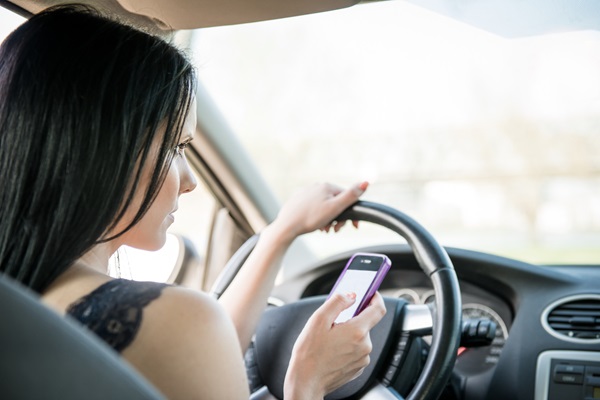
You can cross an entire football field at highway speed in the time it takes to glance at a notification. Most drivers know this. Most drivers also believe, in the back of their mind, that it won't be them. They're confident that they'll look up in time, that their reflexes are sharp enough, that the risk is something that happens to other people. The California Highway Patrol has spent years watching what happens when that belief meets reality, and this month, they're taking decisive action on distracted driving.
April is National Distracted Driving Awareness Month, and the CHP isn't treating it as a ceremonial occasion. This means officers aren't issuing warnings. Drivers holding their phones while driving will receive a citation.
Why the CHP Is Escalating Enforcement Right Now
Last year, California law enforcement issued more than 111,700 citations for distracted driving violations. This marks a nearly 20 percent increase from the year before. That number reflects two things at once: more enforcement effort from officers, and a persistent culture of phone use behind the wheel that hasn't responded to education alone. The CHP's zero-tolerance period is designed to send a signal that the legal environment has shifted.
California also strengthened its hands-free law at the start of this year. Under legislation that took effect February 28, 2026, all drivers are prohibited from holding or using their phones in any manner while operating a vehicle. This standard goes beyond the earlier hands-free requirement and eliminates most gray areas about what's permitted.
What California's Distracted Driving Law Now Covers
California has had cell phone restrictions on drivers since 2008, but the current law is more comprehensive than earlier versions.
The legislation that took effect on February 28, 2026, was a direct response to the rising number of "active use" collisions in the Bay Area. In places like Walnut Creek and Antioch, where stop-and-go traffic is the norm, many drivers mistakenly believe it is legal to scroll while at a red light. The new law makes it clear: if the vehicle is on a public road, the phone must be mounted and out of your hands. This creates a powerful "negligence per se" argument in a personal injury case, as the driver was in direct violation of a safety statute.
Here's what's now prohibited for all drivers in California:
- Holding a phone in your hand for any purpose while driving, including at red lights or in stopped traffic
- Texting, scrolling, or reading messages while operating a vehicle
- Taking or making calls without a hands-free setup
- Using apps, including navigation apps, without a properly mounted device
- Recording video or streaming while driving
What remains permitted includes voice-command features, Bluetooth phone calls, and navigation apps displayed on a properly mounted device that can be operated with a single tap. The key distinction is contact; if your hand is on the phone, you're in violation.
Financial and Legal Consequences of a California Citation
The base fine for a first-offense distracted driving violation in California is $100. A second offense within 36 months carries a $250 fine plus a mandatory distracted driving course. A second violation within that 36-month window also adds a point to the driver's license record, triggering higher insurance rates.
It's worth noting that penalty assessments in California can more than double what a driver actually pays. What starts as a $100 fine can become a significantly larger financial event by the time the courthouse is done with it.
For drivers cited during the April zero-tolerance period, there are no warnings, no discretionary passes. The citation is automatic.
Liability and Recovery in California Distracted Driving Wrecks
A citation during a zero-tolerance enforcement period is a traffic matter. A distracted driver who causes a serious crash is something else entirely. For victims, the cause-and-effect pathway from that moment of inattention to the injuries they're carrying can take weeks to surface fully. Concussions don't always announce themselves on the roadside. Soft tissue injuries worsen over days. Internal trauma can be invisible in the first hours after a collision.
For example, consider a driver who's struck at an intersection by someone who ran a red light while holding their phone. The initial police report may note the phone use. But by the time the victim understands the full extent of their injuries, weeks have passed, and the other driver's insurance provider is already working to close the claim for as little as possible.
Because California follows a pure comparative fault system, insurance adjusters often try to shift a percentage of the blame onto the victim to reduce their payout. They might argue you were speeding or failed to take evasive action. Our firm counters this by focusing on the "distraction gap." We use crash reconstruction experts to prove that the other driver’s phone use made the collision unavoidable for you, regardless of traffic conditions on the 680 or Highway 4.
What Evidence Matters in a Distracted Driving Case
Building a case against a distracted driver requires more than knowing they were on their phone.
Evidence that can support a California distracted driving injury claim includes:
- Cell phone records subpoenaed to show call, text, or app activity at the time of the crash
- The CHP or local police accident report, particularly any notation about phone use
- Dashcam footage from your vehicle or nearby traffic cameras
- Eyewitness accounts from other drivers, passengers, or pedestrians at the scene
- Medical records connecting your injuries to the date and nature of the collision
The sooner this evidence is preserved, the stronger a potential claim becomes. Cell carrier records have retention limits. Surveillance footage gets overwritten. Witness memories fade. Time is not neutral in these situations.
Proven Results for Bay Area Car Accident Victims
Since 2007, our car accident attorneys have been representing injury victims throughout Walnut Creek, Antioch, Benicia, Brentwood, Pittsburg, and across the Bay Area. We've recovered millions for people hurt in automobile accidents, including a $2.6 million auto accident settlement that reflected the real cost of what our client endured.
When you hire Clancy & Diaz, LLP, you are getting a team that knows the local courts in Contra Costa and Solano Counties. We don't just "process" cases; we leverage every available angle—from digital forensics to witness canvassing—to ensure your settlement reflects the true cost of your recovery. Whether we are meeting you in Brentwood, Pittsburg, or at a hospital in Walnut Creek, our goal is to provide elite-level representation with a local perspective.
We know how to use crash reports, medical records, expert testimony from reconstruction experts, and cellphone records to build strong distracted-driving car accident cases. We'll go up against insurance companies that try to push you into a quick settlement.
If you were injured by a distracted driver in the East Bay, contact our law firm for a free case evaluation. We'll come to you at home or in the hospital if that's what you need.
"Pete Clancy is a Pro. I am completely happy with Pete and his firm. I had a motorcycle injury case, and he leveraged every angle of my case to produce excellent results. I definitely recommend this firm." - M.T., ⭐⭐⭐⭐⭐