
New Research Ties Speed Directly to Pedestrian Injury Severity
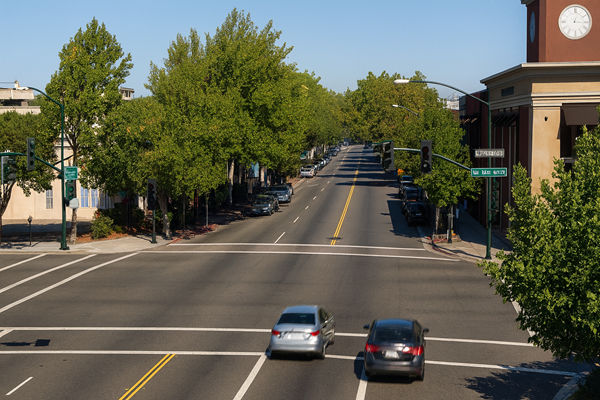
A pedestrian struck at 20 mph has an 18% chance of severe injury. At 40 mph, that risk soars past 80%.
What’s the right speed for traffic on a neighborhood street? The answer often depends on perspective. If you’re a driver cutting through on your way to work, you may feel compelled to move quickly. However, if you live where your kids play, neighbors walk their dogs, and bicyclists share the road, your answer will likely be very different.
For decades, traffic engineers and lawmakers focused mainly on drivers, intending to keep vehicles moving without delay. That thinking is beginning to change. More and more communities are shifting toward protecting pedestrians and other vulnerable road users, and one of the simplest ways to do that is by lowering speed limits to help prevent serious and fatal pedestrian accidents.
Why does speed matter so much for safety?
Pedestrian safety has long been overlooked in U.S. traffic policy, and the results have been deadly. Nearly one in five traffic deaths today involves a pedestrian, and fatalities have jumped 78% since 2009.
The relationship between speed and survival is dramatic. A small change in vehicle speed can be the difference between life and death. Research shows that when a pedestrian is struck at 20 mph, there’s about an 18% chance of severe injury. At 30 mph, the risk rises to 50%. At 40 mph, it soars to more than 80%.
Other reasons why speeding is so dangerous include:
- Less reaction time: At higher speeds, drivers have less time to notice hazards and respond before a collision occurs.
- Longer stopping distance: Vehicles require more distance to come to a complete stop when traveling at high speeds, which makes it harder to avoid crashes.
- Greater crash force: The faster a car is traveling, the more severe the impact will be, which increases the likelihood of serious injuries or death.
- Reduced vehicle control: High speeds make it harder to steer, brake, and handle curves or sudden obstacles.
- Higher risk of losing traction: Speeding increases the chance of skidding or hydroplaning, especially in poor weather conditions.
- Less effective safety features: Seatbelts, airbags, and crumple zones are designed for certain impact speeds. Extreme speed reduces their ability to protect occupants.
- Increased risk to others: Pedestrians, cyclists, and other drivers face greater danger from speeding vehicles because of the force and unpredictability involved.
What makes it hard for communities to lower speeds?
Most residential streets in the U.S. have default limits of 25 or 30 mph. But in practice, many drivers exceed those numbers by 5–10 mph. Some cities recognize the danger and have taken steps to bring speeds down.
Local governments don’t always have the authority to change speed limits on their own. State laws often require expensive engineering studies, while looking at factors such as traffic volume, crash history, and current speeds. This process can take years. Since 2013, 19 states have reformed their laws to give local governments more flexibility, including California.
Why is the 85th percentile method a problem?
Traditionally, speed limits have been set using the “85th percentile” rule. This means the limit is based on the speed that 85% of drivers travel at or below. In effect, drivers themselves set the rules. The problem is that this approach ignores the presence of pedestrians and cyclists. It also pushes limits higher over time, since raising a limit often leads drivers to go faster, which creates an endless cycle.
Fortunately, change is happening. The latest federal Manual on Uniform Traffic Control Devices now places less weight on the 85th percentile. It encourages agencies to consider land use, crash history, and pedestrian activity, especially in urban and suburban areas. National transportation groups also recommend safer limits, such as 20 mph on minor roads and 25 mph on major city streets.
How does this fit into the bigger safety vision?
The Insurance Institute for Highway Safety has set a “30x30” goal to reduce traffic deaths by 30% by the year 2030. Lowering speed limits is one of the quickest steps toward achieving that. But it’s just one part of a broader cultural shift. For decades, traffic planning revolved around vehicles. Now, agencies are beginning to prioritize pedestrians, cyclists, and everyone else who shares the road. The faster communities embrace this new perspective, the safer neighborhoods will become for everyone.
Injured by a negligent driver? Clancy & Diaz is ready to fight for you
If you were hurt in a crash caused by another driver's reckless actions, your health, finances, and peace of mind could be in jeopardy. Insurance companies only make matters worse by using tactics to keep your compensation as low as possible.
Clancy & Diaz, LLP has earned a reputation for standing up to insurance companies and holding reckless drivers accountable, and we’re committed to guiding you through every step of the claims process. We can thoroughly investigate your speed-related car accident and negotiate with insurance companies for a fair settlement. If they fail to settle for a fair amount or act in bad faith, we're prepared to take your case to court if necessary.
When you reach out for a free consultation, you’ll meet with an attorney who takes the time to really listen to your story. We’ll answer your questions, clearly explain your legal options, and provide an honest idea of what to expect moving forward. You won’t pay anything up front and nothing out of pocket. That's because we work on a contingency fee basis, which means we only get paid if we win your case.
With offices in Walnut Creek, Antioch, Pittsburg, and Benicia, we’re proud to serve communities across Contra Costa County and Northern California. If you were injured in a car accident that wasn't your fault, don’t wait to get legal help. Contact us online or call today to schedule your free consultation.
"Pete Clancy is a Pro. I am completely happy with Pete and his firm. I had a motorcycle injury case, and he leveraged every angle of my case to produce excellent results. I definitely recommend this firm." — M.T., ⭐⭐⭐⭐⭐