
Who Is at Fault When a Self-Driving Tesla Hits a Pedestrian?
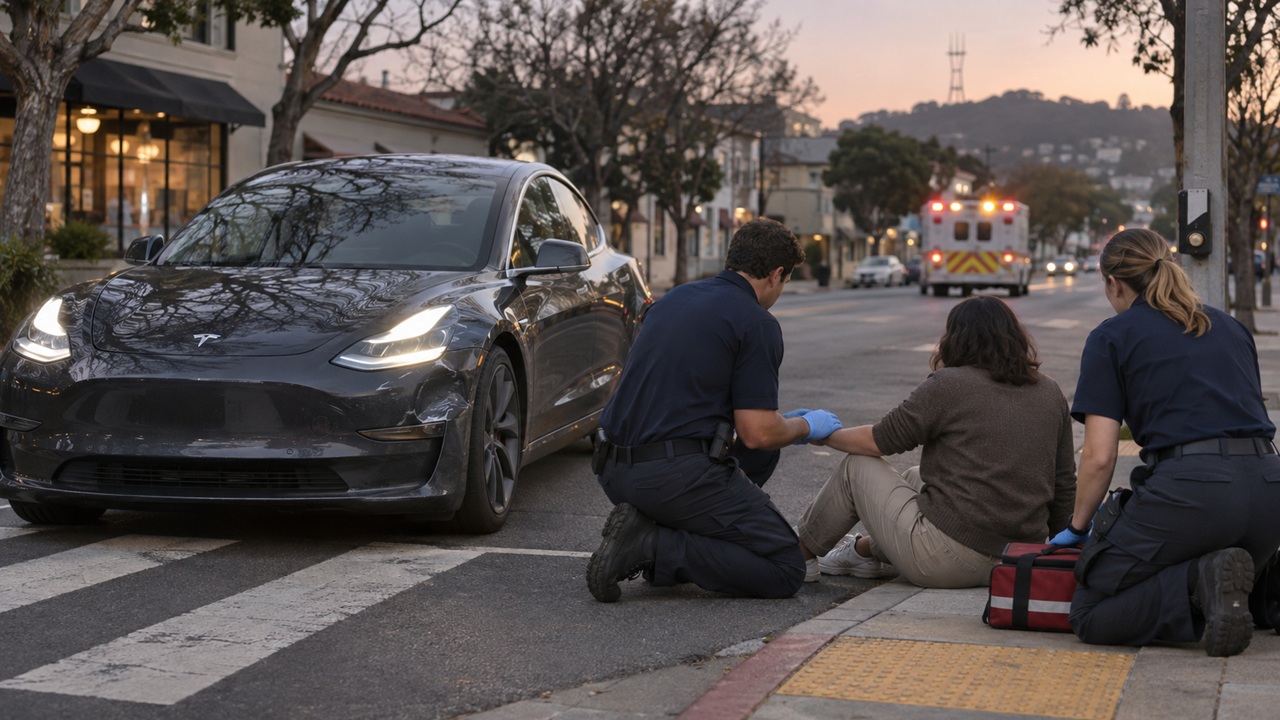
The Driver, the Automaker, and Other Motorists Can All Share Responsibility Under California Law
A fatal self-driving Tesla crash on Interstate 80 in Vallejo has raised hard questions about fault under California law. A 71-year-old man was struck around 2:35 a.m. on Oct. 22, 2026, near the I-780 interchange. That's according to the California Highway Patrol (CHP). The driver told officers the Tesla was in Full Self-Driving mode, ABC7 reported.
Dashcam video showed the car traveling about 70 mph, then braking and steering left before impact. The man was then struck by at least one more vehicle whose driver didn't stop. The CHP is still looking for witnesses. A single tragedy like this one can involve a supervising driver, an automaker, and a motorist who fled. Each played a different role in what happened.
Families facing a loss like this often don't know where to start. Meanwhile, the evidence that answers the fault question can disappear quickly. Vehicle data, video, and witness memories all have short shelf lives. A Bay Area car accident lawyer can sort out who shares responsibility before that evidence is gone. The same lawyer can find every insurance policy that should pay.
|
Who May Share the Blame
|
Is the Driver Still Responsible When Full Self-Driving Is On?
Yes, in most cases. Tesla now sells the feature as Full Self-Driving (Supervised), and that last word matters. The system is a driver-assist tool, not a car that drives itself. The person behind the wheel must watch the road and be ready to take over at any moment.
California regulators have been blunt about the gap between the name and the reality. In late 2025, the California Department of Motor Vehicles (DMV) ruled that Tesla's earlier marketing was misleading. To avoid a sales suspension, Tesla dropped the "Autopilot" name in California and added the word "Supervised."
State traffic law points the same way. California Vehicle Code Section 21954 asks pedestrians outside crosswalks to yield. It still keeps the driver's duty of due care toward anyone on the roadway. The driver's auto policy is usually the first source of compensation. Its limits, though, are often far too small to cover a death.
When Can Tesla Share the Blame?
An automaker can be held responsible when a product defect helps cause a crash. In a self-driving case, that claim might focus on software that failed to detect a person in the road. It might also focus on weak warnings or marketing that led drivers to over-trust the system.
Juries have already been willing to hold Tesla accountable. In 2025, a federal jury in Miami found Tesla 33 percent responsible for a fatal Autopilot crash. The woman who died was standing beside a parked SUV. A judge later upheld the $243 million verdict, which Tesla is expected to appeal.
Federal safety regulators are also taking a hard look at the technology. In March 2026, the National Highway Traffic Safety Administration escalated its investigation into Full Self-Driving crashes in low-visibility conditions. The original probe followed a crash that killed a pedestrian. Product cases like these take vehicle data and engineering analysis, and Tesla fights them hard.
What Happens When Another Driver Hits and Runs?
The motorist who struck the man a second time and kept going is a separate at-fault party. Fleeing the scene of a crash involving death or injury is a serious crime in California. In a civil claim, that driver's share of fault doesn't vanish just because no one has found the car.
When a hit-and-run driver is never identified, uninsured motorist coverage can step in. It can apply through the person's own auto policy or a household relative's policy, even for someone on foot. California requires proof that the fleeing vehicle actually made contact. The CHP's findings can help establish that.
Insurance companies handle these claims with the same cost-cutting goals they bring to every case. A family that misses a policy deadline can weaken a valid claim. So can giving a recorded statement too soon. Having a lawyer manage those contacts protects the claim from the start.
Can a Family Recover if a Pedestrian Was on the Freeway?
Yes. Insurance companies will almost certainly point to where a pedestrian was walking, but that argument doesn't end a claim. California follows a pure comparative fault rule. Any share of fault assigned to the person who died reduces the compensation. It never wipes out the family's right to recover.
Drivers still owe a duty of care to pedestrians outside crosswalks, including on high-speed roads. A driver relying on software at highway speed at night must still watch closely enough to react. A system that fails to spot a person in its lane raises serious questions for the company that built it.
How fault gets divided matters more than many families realize. Under California Civil Code Section 1431.2, each defendant pays only its own share of non-economic losses. Those include grief and the loss of a loved one's companionship. Leaving out a responsible party, such as Tesla, can leave part of that loss unpaid.
How Responsibility Can Be Divided After a Self-Driving Crash
A self-driving pedestrian crash rarely has a single source of compensation. Each party below plays a different role, and each claim follows its own path. Knowing who belongs on this list is the first step toward a full recovery for the family.
| Party | Possible Basis for Fault | Where Compensation Comes From |
|---|---|---|
| Tesla Driver | Failing to supervise the system or react in time | The driver's auto insurance policy |
| Tesla | Software defect, poor warnings, or misleading marketing | A product liability claim against the automaker |
| Identified Hit-and-Run Driver | Striking the pedestrian and fleeing the scene | That driver's auto insurance policy |
| Unidentified Hit-and-Run Driver | Striking the pedestrian and fleeing the scene | Uninsured motorist coverage on the family's own policy |
These claims often move on different timelines and against very different opponents. A driver's insurance company may push for a quick, low settlement. A product claim against Tesla can take years. Settling one claim the wrong way can affect the others, so the strategy has to account for every party from the start.
Evidence That Decides a Self-Driving Crash Case
Self-driving crash cases turn on data. Much of it sits with parties who have reasons to keep it quiet, so families need it locked down before it's overwritten, lost, or explained away.
- Vehicle Data Logs – Tesla records what the system saw and did, including speed, steering, and braking, and that data needs a formal preservation demand.
- Dashcam Footage – The CHP has the car's video, which can show what the driver and the software had time to see.
- Crash Report and Reconstruction – The CHP's findings on speed, lighting, and lane position help experts measure how much time each party had to react.
- Witnesses and Other Dashcams – Other drivers' accounts and videos may identify the hit-and-run vehicle and fill gaps in the timeline.
- The Driver's Phone and Attention Data – Phone records and in-car monitoring can show whether the driver was actually supervising the system.
Most families don't have the tools to demand this evidence on their own. Automakers and insurance companies have lawyers and engineers working from day one, and they control much of the data. A lawyer can send preservation letters and hire independent experts. That keeps the full record available when fault is decided.
Who Can File a Wrongful Death Claim in California, and When
California allows certain close family members to bring a wrongful death claim. That usually means a spouse or registered domestic partner and children. In some situations, parents or others who depended on the person can file too. The claim seeks compensation for lost financial support, the loss of love and companionship, and funeral and burial costs.
The deadline to file is generally two years from the date of death. That may sound like plenty of time, but the evidence in a self-driving case won't wait that long. Vehicle data can be overwritten, hit-and-run leads go cold, and witnesses move or forget details within weeks.
Product claims against an automaker also take months of preparation before anything is filed. Families who start early give their lawyer time to build the case instead of racing a deadline. Early action also protects the family from a quick insurance offer made before the facts are known.
Going the Distance for Families After a Fatal Crash
Clancy & Diaz, LLP has fought for injured people and grieving families across Northern California since 2007. Attorney Pete Clancy builds every case through accident reports, medical records, expert consultations, and witness interviews. That level of detail matters when a family is up against an automaker and multiple insurance companies at once.
The firm's case results include a nearly $1.5 million recovery for a pedestrian struck by a big rig. They also include a $3 million wrongful death result. The team meets families at home or wherever is most convenient. No one has to travel during the hardest weeks of their lives.
If a self-driving car took someone you love, talk with a lawyer who won't back down about holding every party accountable.
"Pete and his team were amazing and helped me through a really hard time in my life. I highly recommend their services." — Melvian D.